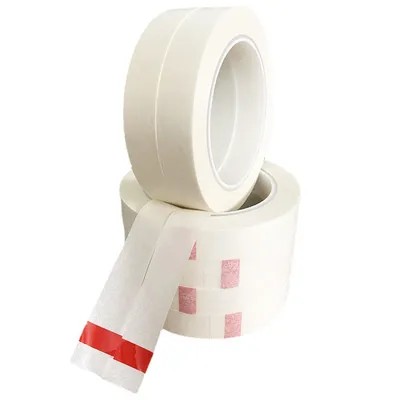
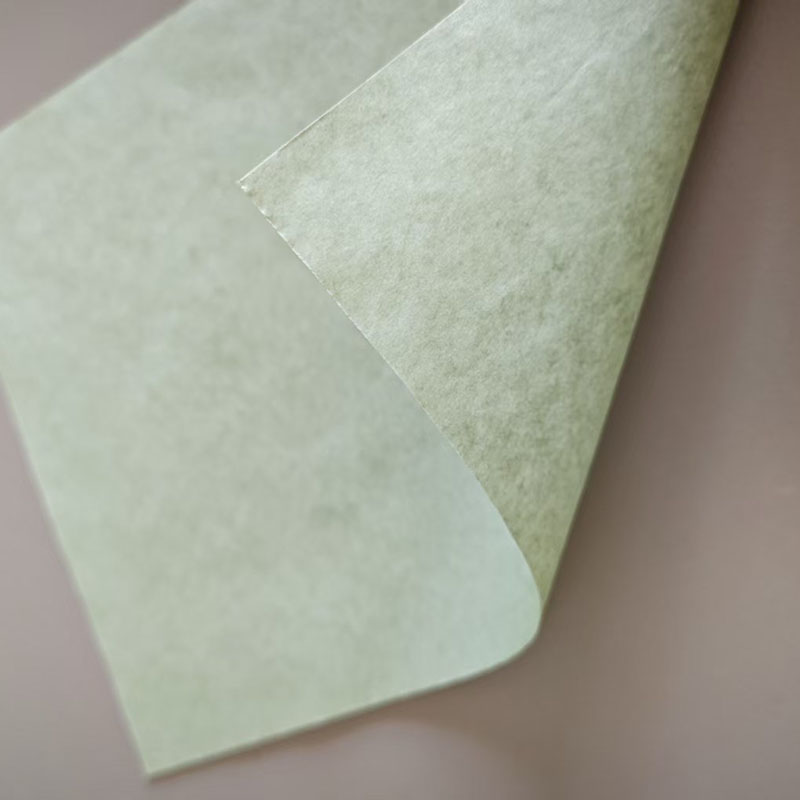
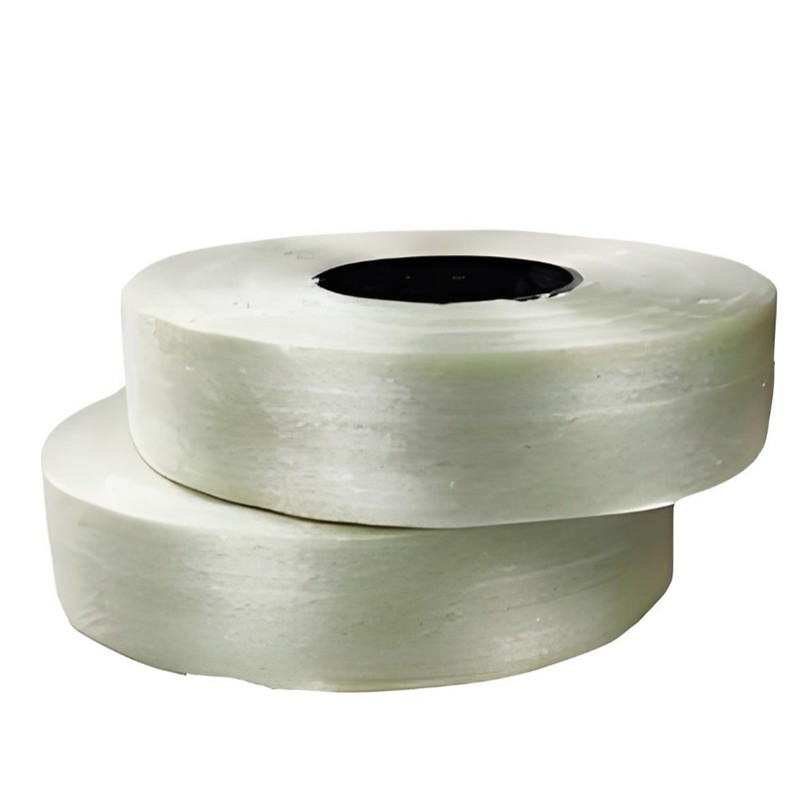
Unidirectional Glass Fiber Tapes are composed of parallel continuous glass filaments with a small amount of sparse stabilizer weft yarns. Its tensile strength concentrates along the fiber axis, making it a widely used FRP material for flexural and shear strengthening of concrete beams, slabs, columns and masonry structures. Compared with fiberglass tapes for general industrial, anti-corrosion or thermal insulation applications, unidirectional glass tape for structural reinforcement has mandatory special requirements on fiber substrate, mechanical properties, alkali resistance, interfacial wetting, construction adaptability, safety certification and traceability, which directly determine the long-term structural safety of retrofitted buildings.
1.Strict fiber substrate selection; high-alkali and medium-alkali glass fiber are prohibited
For load-bearing structural strengthening, only E-glass, high-strength S-glass or alkali-resistant AR glass fiber are permitted. The content of alkali metal oxides must be strictly controlled. For E-glass, alkali content shall be below 0.8%. High-alkali and medium-alkali fiberglass products are forbidden. High-alkali fibers will be quickly eroded by calcium hydroxide from cement hydration in alkaline concrete environments, leading to sharp strength loss and severe structural risks.
Alkali-resistant grades usually contain zirconia components to retain tensile strength under alkaline cement conditions, commonly used for masonry and mortar composite strengthening. Batch fiber composition test reports are required for incoming inspection.
2.Mechanical properties comply with strengthening codes with 95% characteristic value guarantee
Mechanical indicators are not simple average values. Tensile characteristic strength shall be calculated under 95% statistical confidence. Domestic standards include JG/T 284, GB50367 and GB50728, defining Grade Ⅰ and Grade Ⅱ:
Besides tensile performance, interlaminar shear strength, flexural strength and direct tensile bond strength between composite and concrete substrate are key control items. Bond tests require cohesive failure inside concrete rather than debonding between fiber and adhesive layer, which proves the reliability of the strengthening system.
Unit area mass normally ranges from 300 g/㎡ to 900 g/㎡ according to design load. Excessively heavy fabric is hard to fully wet out by hand lay-up and tends to form dry filaments inside the laminate.
3.Sizing and surface treatment compatible with structural epoxy resin
Sizing agents for general fiberglass tapes are formulated for unsaturated polyester or vinyl ester resin, which are incompatible with structural epoxy impregnation resin used in building reinforcement. Structural-grade unidirectional glass tape must adopt silane coupling agent modified sizing to guarantee stable interfacial bonding with epoxy.
Sizing content must be controlled within a reasonable range. Excessive sizing blocks resin penetration and causes dry filaments and delamination; insufficient sizing leads to fuzzing, fiber splitting and filament misalignment during cutting and rolling.
Resin compatibility tests shall be performed for each batch. The tape and matched epoxy adhesive must be tested together as a composite system instead of testing fiber alone.
4.Durability requirements: alkali resistance, humidity-heat aging, freeze-thaw and UV resistance
Embedded inside alkaline concrete, FRP reinforcement is exposed to cyclic temperature, moisture, freeze-thaw cycles and ultraviolet radiation. Durability is the core difference from ordinary fiberglass tape:
Fatigue resistance: composite fatigue performance shall match the design service life under repeated live load of buildings.
Many common fiberglass tapes only pass short-term tensile tests without long-term aging validation and cannot be used for permanent load-bearing strengthening.
5.Appearance, fiber alignment and process performance for on-site hand lay-up
Fiber parallelism is critical. Warp yarn tension must be uniform without offset, loose yarn or uneven density. Weft yarns only serve as stabilizers with low tension and do not interfere with force transfer along the main load direction.
Defects such as broken filaments, permanent creases, oil stains and impurities are not allowed. Any creased section must be cut off and discarded before installation. Clean cut edges reduce fuzzing and fiber splitting, convenient for layout, cutting and multi-layer lap bonding.
Lap length follows specification strictly: minimum lap length is 200 mm along the load direction; for laminates with three or more layers, lap length ≥ 300 mm, with anchoring details at lap zones to prevent end debonding.
6.Mandatory safety certification, third-party testing and traceability
For load-bearing structural retrofitting in China, FRP composite materials must pass safety appraisal under GB50728. The appraisal certificate is mandatory for incoming inspection, supervision check and final acceptance. Materials without valid appraisal reports are not allowed on load-bearing members.
Witness sampling tests include areal weight, tensile strength, elastic modulus, elongation, concrete direct tensile bond strength and interlaminar shear strength.
For international projects, materials shall comply with ACI 440, ISO 18319 and other FRP strengthening standards with independent laboratory test reports.
7.Matched adhesive system; random adhesive substitution is prohibited
The final capacity of unidirectional glass fiber reinforcement depends on both fiber tape and impregnating epoxy resin, which work as a complete system. Structural epoxy adhesive shall feature low viscosity, excellent wetting, high bonding strength, qualified heat distortion temperature, low shrinkage and low volatile content.
General construction adhesive or ordinary unsaturated polyester shall never replace structural impregnation epoxy. Such low-modulus resin creeps heavily and may cause premature debonding of the strengthening layer.
8.Storage, packaging and shelf life management
Unidirectional glass fiber tape is sensitive to moisture. Dampness will degrade sizing and impair resin wetting performance. Rolls are sealed with moisture-proof packaging to avoid squeezing and bending. Storage areas shall be cool, dry and away from rain, ground moisture and direct sunlight.
Each roll is labeled with specification, areal weight, batch number, production date, expiry date and fiber type. Expired material can only be reused after passing re-inspection.
We use cookies to offer you a better browsing experience, analyze site traffic and personalize content. By using this site, you agree to our use of cookies. Privacy Policy